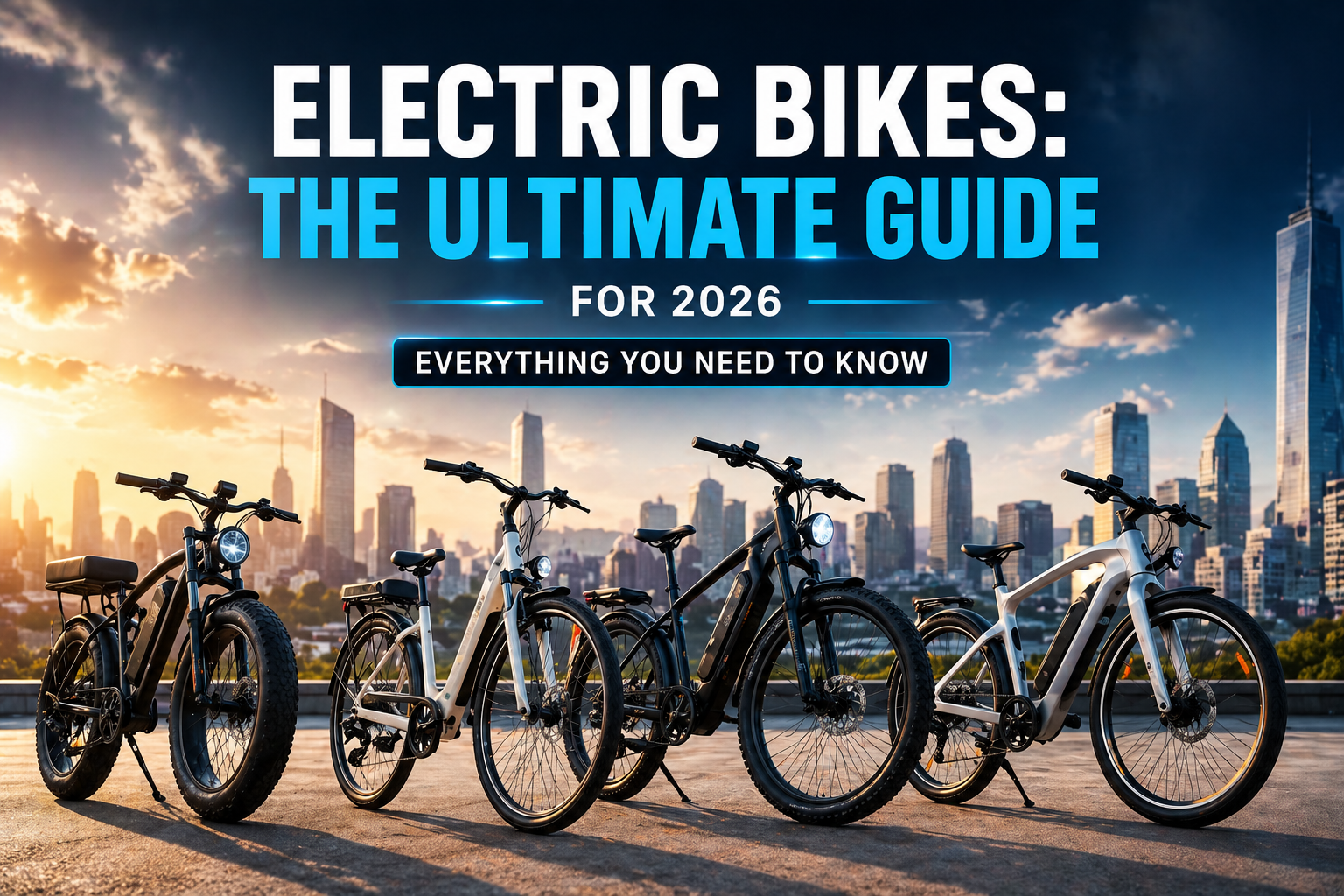
Okay, real talk. I bought my first electric bike on a Tuesday afternoon, convinced I didn’t need one. By Wednesday morning I was texting my friends at 6am saying “guys, why didn’t you tell me about this sooner?” That’s the power of a good e-bike — it doesn’t just change how you ride, it changes how you think about getting around.
But here’s the thing: the market is a total jungle right now. Hundreds of models, confusing specs, and about seventeen different definitions of “range.” So I put this guide together to cut through the noise. Whether you’re curious, skeptical, or already sold and just need help picking one — this is your starting point.
What Is an Electric Bike?
An electric bike — also called an e-bike — is a regular bicycle with a built-in electric motor and a battery. The motor helps you pedal, so you don’t arrive at work looking like you just survived a triathlon. Some models also have a throttle, meaning you can cruise without pedaling at all.
It is NOT an electric scooter. It is NOT an electric motorcycle (for the most part). It’s your regular bike, just with a secret weapon tucked inside the frame. According to PeopleForBikes, e-bike sales in the US have grown over 240% in the last five years. Yeah. That kind of growth doesn’t happen by accident.
How Do Electric Bikes Work?
Three components run the show on every electric bike:
The Motor
Your motor is either a hub drive (inside the wheel — simple, quiet, great for flat roads) or a mid-drive (at the pedals — more natural feel, better on hills). Mid-drive motors like Bosch or Shimano are beloved for their trail performance. Hub motors win on simplicity and price.
The Battery
Measured in watt-hours (Wh). Think of Wh like a fuel tank: the bigger, the farther. Most quality e-bikes ship with 400–750Wh. A 500Wh battery gives you roughly 30–50 real-world miles depending on how hard you pedal and how heavy you are. (No judgment, we’re counting watts not calories.)
The Controller and Display
This is your dashboard. Eco, Tour, Sport, Turbo — those assist levels are your gears for managing range vs. power. Most modern displays are color LCD, weatherproof, and connect via Bluetooth to a companion app.
How Fast Do Electric Bikes Go?
Depends on the class. In the US, federal law defines three classes:
- Class 1: Pedal-assist only, tops out at 20 mph. Allowed on most bike paths.
- Class 2: Has a throttle, max 20 mph. Slightly broader access.
- Class 3: Pedal-assist only, up to 28 mph. Watch for local restrictions on bike lanes.
Can you go faster? Technically yes — some bikes go 45–50 mph — but those cross into motor vehicle territory legally. For 99% of riders, 28 mph is plenty. You’ll be passing traffic, not racing it.
How Much Does an Electric Bike Cost?
Here’s the honest breakdown, no fluff:
- Under $1,000: Entry level. Brands like Jasion, Gotrax, Ridstar. Fine for casual riding — don’t expect it to outlast a relationship.
- $1,000–$3,000: The sweet spot. Aventon, Rad Power, Trek. This is where most happy riders live.
- $3,000–$8,000: Premium territory. Bosch motors, proper suspension, integrated everything. Worth it if you ride daily.
- $8,000+: Carbon frames, custom builds, “yes I’m a cyclist” energy. You know who you are.
👉 Best electric bikes under $1,000 | Best electric bikes of 2026
Types of Electric Bikes
Not all e-bikes are the same beast. Here’s the lineup:
City and Commuter E-Bikes
Upright riding position, fenders, rack, integrated lights. Built for point A to point B without drama. The Rad Power RadCity 5 Plus is the gold standard here.
Electric Mountain Bikes (eMTB)
Full suspension, aggressive tires, powerful mid-drive motors. These bikes laugh at hills that would make regular cyclists cry. The Trek Rail 9.7 is a benchmark.
Folding Electric Bikes
Compact, portable, fits in your car trunk or under your desk. The Lectric XP4 does this better than almost anyone at any price.
Fat Tire Electric Bikes
Wide 4″+ tires float over sand, snow, gravel, and questionable road surfaces. The Himiway Cobra is built for adventure-first riders.
Electric Dirt Bikes
Off-road, aggressive, often no pedals. Sur-Ron and Talaria lead this category. Read our full electric dirt bike guide.
Do You Need a License for an Electric Bike?
Great news: in most US states, no license, no registration, no insurance required for Class 1, 2, and 3 e-bikes. Federal law classifies them as bicycles — not motor vehicles — as long as they stay under 750W and 28 mph assisted. Individual states have their own rules on where you can ride, so always double-check locally.
Performance models like the Sur-Ron or Talaria? Those are a different story — they often require registration as motor vehicles. See our dirt bike legal breakdown.
Are Electric Bikes Safe?
Yes — and the data backs this up. A 2023 study by the BMJ Injury Prevention journal found e-bike injuries are comparable to regular cycling when protective gear is worn. The main risks come from higher speeds and heavier bikes — both manageable with a helmet and basic road awareness.
Wear a helmet. Every ride. Non-negotiable. And yes, most e-bikes handle light rain just fine — check the IP rating on yours.
How to Charge an Electric Bike
Easier than charging your phone, honestly. Plug the included charger into a standard 110V wall outlet, connect to the bike’s port, wait 3–6 hours. Done. Tips to keep your battery living longer:
- Keep charge between 20–80% for storage
- Don’t leave it at 100% for weeks at a time
- Store indoors — batteries hate extreme cold
- Only use the manufacturer charger (yes, really)
Electric Bike Buying Guide: What Actually Matters
Ignore the marketing fluff. Focus on these:
- Motor type and watts: 250W for flat cities, 500W for mixed terrain, 750W+ for hills and heavier riders.
- Battery Wh: 500Wh minimum for regular 20+ mile rides.
- Brakes: Hydraulic disc only. Anything else on a 55 lb bike is a compromise.
- Real-world range: Divide the manufacturer’s claim by 1.5 to get a realistic number.
- Warranty: 2 years minimum on motor and battery. No warranty = no deal.
Ready to shop? See our Best Electric Bikes 2026 guide →
Frequently Asked Questions
What is an electric bike?
An electric bike is a bicycle with an integrated motor and battery that assists your pedaling (or propels you via throttle). Legal in most US states without a license for models under 750W and 28 mph.
How much does an electric bike cost?
From around $400 for budget models to $15,000+ for premium builds. Most happy everyday riders spend $1,000–$3,000.
Do you have to pedal an electric bike?
Class 1 and 3 require pedaling for motor assistance. Class 2 has a throttle so you can ride without pedaling. Depends on the model you choose.
Can you ride an electric bike in the rain?
Most are water-resistant and handle light rain fine. Check the IP rating. Avoid heavy storms and never submerge the motor or battery.
How much does an electric bike weigh?
Most e-bikes weigh 45–80 lbs. Folding models and carbon-frame bikes can come in under 40 lbs. Weight matters if you carry it upstairs or load it onto a car rack.